
Dental hygiene habits start earlier than you think
There’s nothing sweeter than a gummy baby smile, but did you know that dental hygiene habits start even before your little one’s first tooth? February is National Children’s Dental Health Month, and we teamed up with Alabama Pediatric Dental Associates and Orthodontics to share tips for ensuring your little one’s future smile is sparkling.

Dental care from birth to six months
Even before the first tooth makes its appearance, you’ll want to start focusing on early dental hygiene habits! You can begin preparing baby for brushing later, by wiping their mouth with a clean, damp cloth or gauze. This is especially helpful after baby has a bottle or nurses, so the milk doesn’t pool in their mouth - this will be important for preventing decay and cavities when their first teeth make an appearance.
Speaking of preventing cavities, did you know they’re contagious? Bacteria that cause cavities can be spread from parent to child when you share utensils, drink after one another, clean a pacifier with your mouth, or test bottle temperature with your mouth.

Care tips from six months to a year
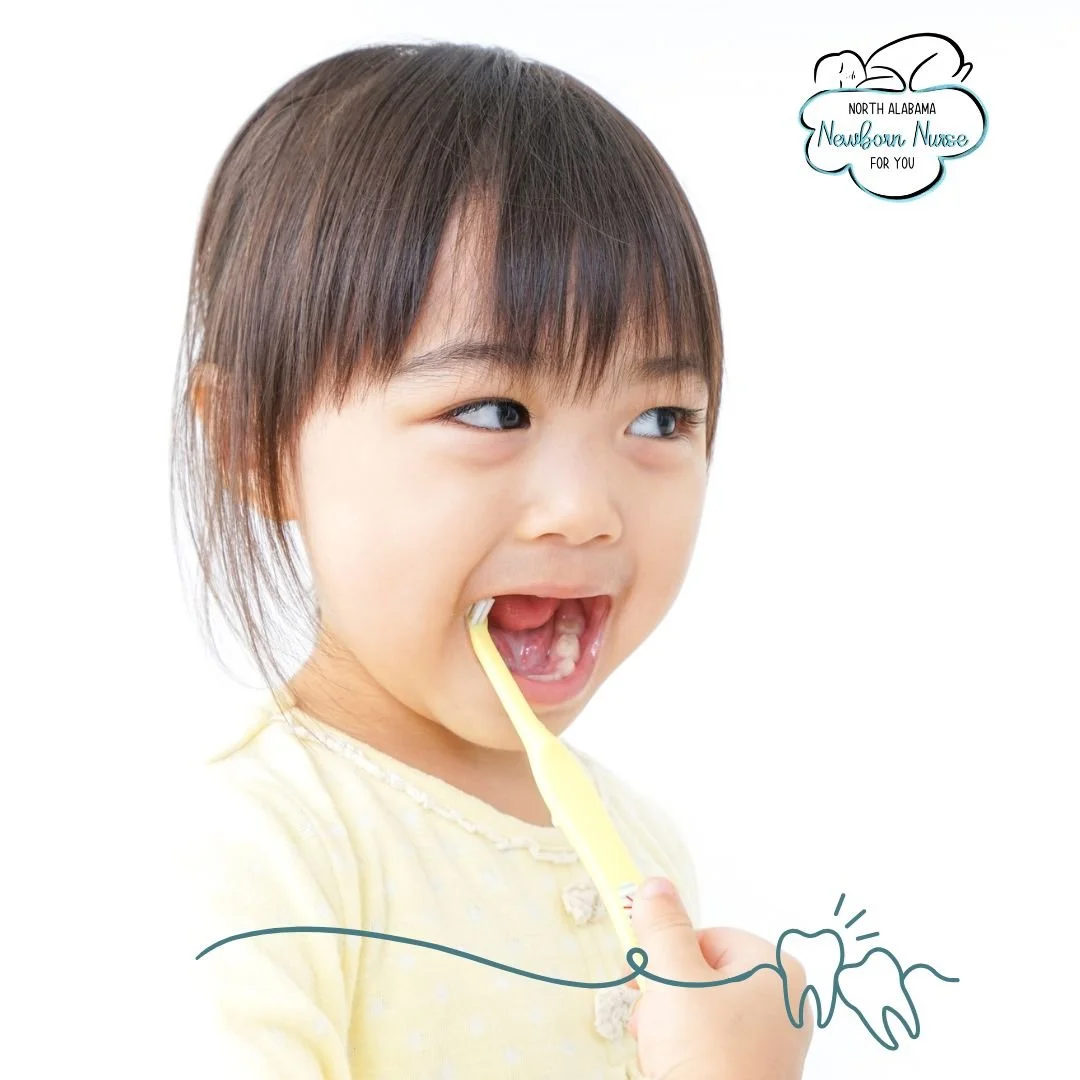
Once the first tooth appears, dental hygiene becomes essential - baby is even ready for their first dentist appointment at their first birthday! Whether your little one has one tooth or several, you should be brushing using a toothbrush with soft bristles and a small brush at least once a day during bedtime.
Not allowing milk or juice to sit in their mouth becomes even more important as well. Sugary drinks can cause tooth decay and cavities in children. Try to avoid nursing or bottle-feeding your little one to sleep, as this reduces saliva production and can lead to rapid decay of their teeth. You can also begin introducing a cup to them at 6 months, so that when they later wean from their bottle the transition will be easier.

Teething relief and when to expect it
Your child’s first tooth usually makes an appearance around 6 months, though it could be a little sooner or later. Typically the two lower front teeth are the first to appear followed shortly afterwards by the top teeth. The remainder of your child’s primary teeth will appear during the next 18 - 24 months and by 2 - 3 years old, they’ll typically have their first 20 teeth.
When your little one begins to teeth it is normal for them to have some gum soreness. They may have increased saliva production and be fussier than usual. You can offer them teething biscuits, toast, or a chilled teething ring to bring them relief.
What to expect at your child’s first dentist appointment
Typically, you want to schedule your child’s first dentist appointment around their first birthday, or within 6 months of their first tooth appearing. The first appointment is usually short and simple - more about getting to know your child and sharing hygiene tips. If possible, the hygienist will clean your child’s teeth, and the pediatric dentist will examine their teeth and gums for any potential problems.
Starting strong habits early will help ensure your little one has a healthy and sparkly smile for years to come!
